

What Is Hastelloy C276 and Why Is It Special?
Hastelloy C276 (designation UNS N10276, W.Nr. 2.4819) is a corrosion-resistant superalloy belonging to the nickel-based alloy family. Its balanced chemical composition includes:
- Nickel: 57–63% (base element)
- Molybdenum: 15–17% (resistance to reducing environments)
- Chromium: 14.5–16.5% (resistance to oxidizing agents)
- Tungsten: 3–4.5% (resistance to localized corrosion)
- Iron: 4–7% (structural stability)
- Carbon: maximum 0.01% (minimizes sensitization)
This composition givesHastelloy C276 unique properties that set it apart from standard stainless steels and other nickel alloys, making it the ideal choice for fastening applications in extreme conditions.
When It Is Necessary to Use Fasteners Made of Hastelloy C276
Environments with high chemical aggressiveness
The use of Hastelloy C276 fasteners is essential when components are exposed to:
- Hydrochloric acid: At varying concentrations and high temperatures, Hastelloy C276 maintains excellent resistance even in the presence of contaminants
- Sulfuric acid: from dilute to concentrated, especially when contaminated with chlorides or other impurities
- Phosphoric acid: including phosphoric acid produced by the wet process that contains fluorides and chlorides
- Organic acids: such as acetic acid, formic acid, and other corrosive organic compounds
- Mixed acidic environments: where multiple corrosive agents act simultaneously
In these environments, conventional fastening systems made of 316 or 304 stainless steel would deteriorate rapidly, compromising the structural integrity of the entire installation.
Presence of Chlorides and the Marine Environment
Pitting corrosion and crevice corrosion are the primary causes of failure in fasteners in chloride-containing environments. Hastelloy C276 offers superior resistance due to its high molybdenum and tungsten content.
When to choose Hastelloy C276 in the presence of chlorides:
| Environment | Chloride Concentration | Temperature | Recommendation |
|---|---|---|---|
| Natural Seawater | ~19,000 ppm | Ambient temperature – 80°C | Hastelloy C276 recommended |
| Concentrated saline solutions | >50,000 ppm | Variable | Hastelloy C276 required |
| Bleaching Processes | Presence of hypochlorite | 50–90°C | Hastelloy C276 required |
| Offshore platforms | Variable with H₂S | Ambient – 150°C | Hastelloy C276 preferred |
High temperatures in corrosive environments
While many materials rapidly lose their corrosion resistance as temperature rises,Hastelloy C276 maintains excellent performance up to approximately 400–500°C in corrosive service.
Fastening systems must be made of Hastelloy C276 when operating in:
- High-Temperature Chemical Reactors with Corrosive Fluids
- Acid Evaporation and Concentration Systems
- Equipment for the production of phosphoric acid
- Ovens and Heat Exchangers in Harsh Environments
- High-Temperature Emission Control Systems
Specific Industrial Applications for Hastelloy C276 Fasteners
Chemical and Petrochemical Industry
In the chemical processing industry, Hastelloy C276 fastening systems are essential for:
- Chemical reactors: flanges, bolts, and fastening systems exposed to acidic processes
- Distillation columns: tray fasteners, internal supports, and connections
- Heat Exchangers: Plate-and-Tube Heat Exchangers, Connections, and Sealing Systems
- Piping and Valves: Bolts, Screws, and Fittings for High-Consequence Systems
- Agitators and mixers: fasteners for blades, shafts, and mechanical seal systems
Pollution Control and Waste Treatment
Flue gas desulfurization (FGD) systems and waste treatment plants operate under extremely corrosive conditions, where the use of Hastelloy C276 fasteners is often the only reliable solution:
- Wet scrubber for SO₂ removal
- Acid/Base Neutralization Systems
- Incineration plants with flue gas cleaning systems
- Chemical Wastewater Treatment Systems
Pharmaceutical and Food Industries
In pharmaceutical and fine chemical manufacturing processes, purity is essential. Fastening systems must withstand:
- Repeated cleaning cycles with strong acids and bases
- High-Temperature Sterilization
- CIP (Cleaning in Place) and SIP (Sterilization in Place) Environments
- Exposure to harsh organic solvents
In these applications, HASTELLOY® C-276 screws provide both corrosion resistance and compliance with the required purity standards.
Wood Pulp and Paper Industry
Paper bleaching processes use chlorine, chlorine dioxide, and hypochlorite under conditions that would rapidly degrade fasteners made of standard materials. Hastelloy C276 is the preferred choice for:
- Digesters and Bleaching Reactors
- Chlorine Recovery Systems
- Pumps and Valves for Bleaching Liquids
- Filters and Centrifuges
Energy Production and Offshore Applications
In the energy sector and on offshore platforms, Hastelloy C276 fastening systems are used in:
- Corrosion Inhibitor Injection Systems
- Equipment for the extraction of acidic gases (H₂S, CO₂)
- Seawater Treatment Systems
- Components for high-enthalpy geothermal wells
- Condensers and Heat Exchangers in Marine Environments
Advantages of Hastelloy C276 Fastening Systems
Multimodal Corrosion Resistance
Unlike many alloys that excel only against specific corrosive agents, Hastelloy C276 offers protection against multiple forms of corrosion:
- Uniform corrosion: low rate of general corrosion
- Pitting corrosion: high resistance due to Mo and W
- Crevice Corrosion: Superior Performance in Cracks and Crevices
- Stress Corrosion Cracking (SCC): excellent resistance to stress corrosion cracking
- Intergranular corrosion: the low carbon content minimizes sensitization
Long-term reliability
Fastening systems are often the most critical components for safety and structural integrity. The use of Hastelloy C276 ensures:
- Drastic reduction in plant downtime for maintenance
- Elimination of Scheduled Fastener Replacements
- Greater operational safety
- Reduced risk of leaks and contamination
- Lower lifecycle cost despite the higher initial investment
Compatibility with base materials
When assembling components made of Hastelloy C276 or other high-performance nickel alloys, it is essential to use fasteners made of the same material or a compatible material to avoid:
- Galvanic corrosion: caused by a difference in electrochemical potential
- Preferential concession: regarding the less noble component
- Compromised integrity: of the entire structure
Comparison with Other Materials Used in Fastening Systems
Hastelloy C276 vs. 316 Stainless Steel
| Feature | Hastelloy C276 | 316 Stainless Steel | When to Choose C276 |
|---|---|---|---|
| Resistance to HCl | Excellent | Poor | Concentrations: >1% or T >40°C |
| Resistance to H₂SO₄ | Excellent | Moderate | Contaminated acid or T >t 60°C |
| Pitting Resistance | Superior | Good | >, and 1000 ppm chlorides |
| SCC Resistance | Excellent | Limited | High loads + chlorides |
| Cost | High | Low | When reliability > s initial cost |
Hastelloy C276 vs. Inconel 625
Both are high-performance nickel alloys, but they have different properties:
- Hastelloy C276: superior in reducing environments and hydrochloric/sulfuric acid environments
- Inconel 625: superior mechanical strength at high temperatures and resistance to oxidation
Best choice: Use C276 when corrosion resistance in acidic environments is a priority; choose Inconel 625 when high mechanical properties at high temperatures are required.
Hastelloy C276 vs. Hastelloy C22
Hastelloy C22 is an evolution of C276 that offers greater resistance in certain specific environments:
- C22 offers better resistance to concentrated oxidizing acids
- C276 offers lower costs and greater availability
- For most fastening applications, C276 remains the most economical and effective choice
Technical Considerations for Selection
Mechanical Properties of Fasteners
Hastelloy C276 fastening systems offer mechanical properties suitable for most applications:
| Properties | Typical value | Notes |
|---|---|---|
| Yield strength (Rp0.2) | ≥350 MPa | Annealed condition |
| Ultimate tensile strength (Rm) | ≥690 MPa | Screws compliant with ASTM B574 |
| Elongation | ≥40% | High ductility |
| Hardness | 170–200 HB | Brinell |
These values ensure reliable performance in most bolted joints, with adequate safety margins in accordance with international standards.
Standards and Reference Specifications
Hastelloy C276 fastening systems must comply with recognized international specifications:
- ASTM B574: Bars and Shapes for UNS N10276 Applications
- ASTM B575: Hastelloy profiles
- ASME SB-574: ASME equivalent for pressure vessels
- DIN 17744: German standard for nickel alloys
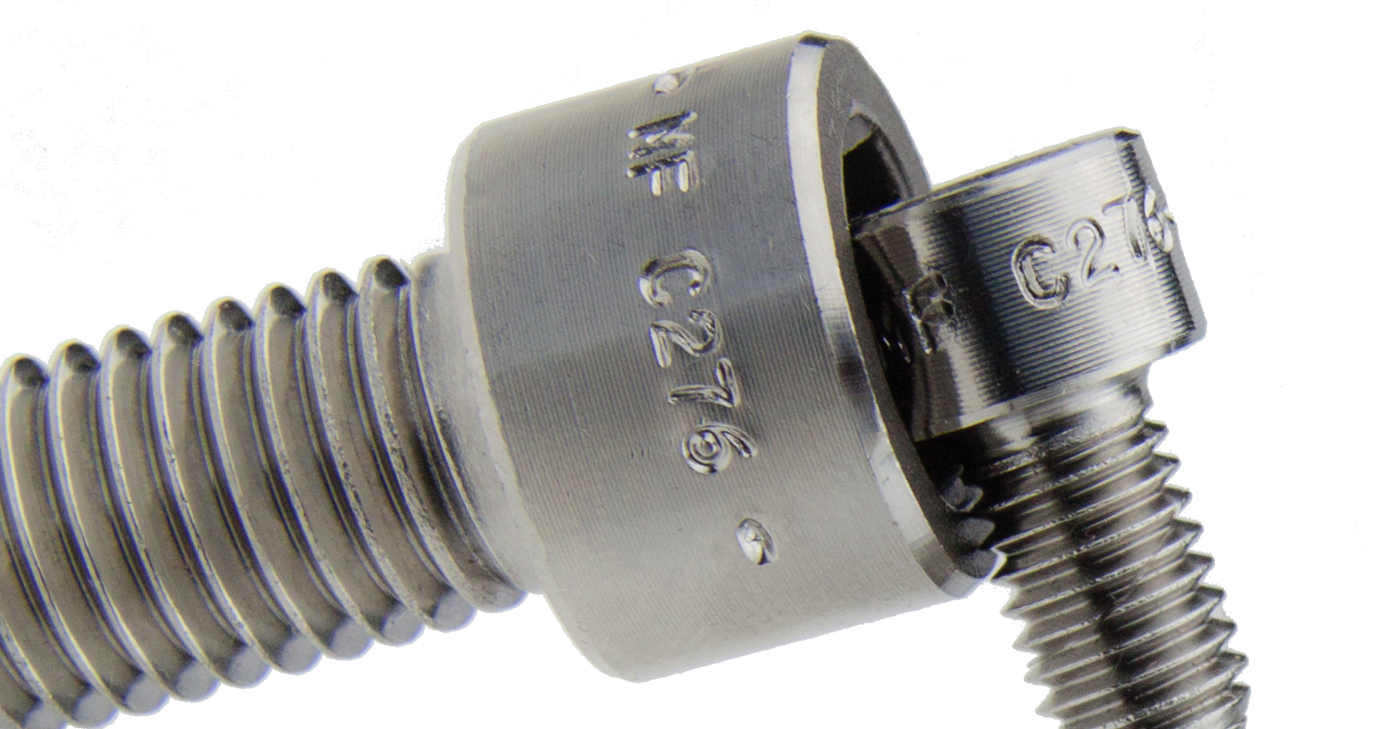
- ISO 4762 / DIN 912: Dimensions for Cylinder-Head Screws with Socket Hex
It is essential to request 3.1 material certificates in accordance with EN 10204 to ensure traceability and compliance.
Surface Treatments and Finishes
Hastelloy C276 fasteners are typically available in several finishes:
- Bright finish: a polished surface achieved through drawing
- Pickling: acid treatment to remove machining oxides
- Passivated: to optimize the protective surface layer
Additional protective coatings are generally not necessary: the alloy offers inherent strength without the compromises associated with coatings that could delaminate or degrade.
Selection Criteria and Cost-Benefit Analysis
When Hastelloy C276 Is Economically Justified
Although the initial cost is significantly higher than that of stainless steel (typically 10 to 15 times as much), Hastelloy C276 fastening systems are cost-effective when:
- High plant downtime costs: production stoppages
- Significant safety risks: leaks of toxic or hazardous fluids
- Access Difficulty: Replacing fasteners requires extensive disassembly
- Frequent replacements: Standard fasteners last <2 years
- Process Issues: No redundancy or backups available
- Stringent regulatory requirements: pharmaceutical, food, and nuclear industries
Alternatives to Consider
Before selecting Hastelloy C276, consider whether less expensive alternatives might meet the requirements:
| Material | Relative cost | When sufficient | When inadequate |
|---|---|---|---|
| AISI 316L | 1x | Mild marine environments, water | Acids, concentrated chlorides, T >80°C |
| Duplex 2205 | 2–3x | Seawater, moderate chloride levels | Reducing acids, H₂S |
| Super Duplex 2507 | 4–5x | High pitting resistance, high loads | Concentrated acids at elevated temperatures |
| Hastelloy C276 | 10–15x | Severe acidic environments | Cost-effective, non-critical applications |
Installation and Best Practices
Tightening Torque and Lubrication
Nickel alloys require special attention when installing fastening systems:
- Mandatory lubrication: Use compatible anti-seize pastes (nickel, copper, or graphite)
- Lower clamping torques: approximately 60–70% of those for stainless steel of the same size
- Gradual tightening: proceed in incremental steps in critical configurations
- Periodic inspection: Check torque values after the initial thermal cycles
Material Compatibility and Galvanic Corrosion
Hastelloy C276 is more noble than many metallic materials. When paired with less noble alloys in a conductive environment, galvanic corrosion may occur. Recommendations:
- Prefer combinations with MF Inox materials of similar grade
- Use electrical insulation in particularly harsh environments
- Protecting the less noble material (sacrificial anode)
- Avoid large cathode-to-anode area ratios
Maintenance and Inspection
Although Hastelloy C276 fastening systems require minimal maintenance, plan for:
- Periodic visual inspections to identify abnormalities
- Checking Tightening Torques According to the Maintenance Schedule
- Check for any scale or deposits that could cause localized corrosion
- Photographic documentation of the condition during critical service life
Case Studies and Real-World Applications
Case 1: Petrochemical Industry – Acid Distillation Column
A petrochemical plant used 316L stainless steel fasteners to flange a distillation column operating with 85% sulfuric acid at 120°C.
Issue: Fasteners must be replaced every 14 months, at a cost of €45,000 per replacement (materials, labor, and production downtime).
Solution: Installation of fastening systems made of Hastelloy C276.
Result: 8 years of operation without replacement, total savings of €320,000, elimination of the risk of losses.
Case 2: Wastewater Treatment – FGD Scrubber
Flue gas desulfurization plant with a temperature of 80–95°C, a pH ranging from 3 to 11, and chloride levels of 5,000–15,000 ppm.
Issue: Fasteners made of Duplex 2205 exhibited intergranular corrosion after 24–30 months.
Solution: Replace with Hastelloy C276 fasteners in critical areas (high chloride concentration).
Result: 10+ years of continuous operation, no maintenance required.
Case 3: Pharmaceutical – Multipurpose Reactor
Pharmaceutical reactor with aggressive CIP cleaning cycles (15% nitric acid, 4M sodium hydroxide) and SIP sterilization at 130°C.
Implemented Solution: Initial design using HASTELLOY® C-276 screws that comply with FDA and EU GMP standards.
Benefits: Guaranteed regulatory compliance; no metal contamination detected in 15 years of operation; validation maintained without the need for requalification.
Frequently Asked Questions About Hastelloy C276 Fastening Systems
When is it really necessary to use Hastelloy C276 instead of stainless steel?
Hastelloy C276 is required when the environment meets at least one of the following conditions: concentrated reducing acids (HCl, H₂SO₄), temperatures >80°C with chlorides >1,000 ppm, thermal shock cycles, the presence of H₂S or aggressive organic acids, or when standard fasteners have repeatedly failed.
Can Hastelloy C276 be welded without losing its corrosion resistance?
Yes, thanks to its extremely low carbon content (<0.01%), Hastelloy C276 can be welded without significant sensitization. Post-weld heat treatment is not normally required for standard corrosive applications, unlike many stainless steels. Use compatible ERNiCrMo-4 (AWS A5.14) filler metals.
What are the most cost-effective alternatives to Hastelloy C276?
The alternatives depend on the specific application: Super Duplex 2507 for severe marine environments (30–40% lower cost), Alloy 825 for moderately concentrated acids (50% savings), and Grade 2 Titanium for oxidizing environments containing chlorides. However, in reducing acidic environments, there are rarely any technically viable alternatives.
How do you calculate the expected service life of Hastelloy C276 fasteners?
Service life depends on specific operating conditions. In the environments for which it is designed, Hastelloy C276 exhibits corrosion rates of <0.05 mm/year. For standard-sized fasteners, this translates to service lives of 20–30+ years. Consult specific corrosion curves or conduct on-site testing for critical applications.
Can I mix Hastelloy C276 fasteners with components made of other materials?
Yes, but be mindful of galvanic compatibility. Hastelloy C276 is compatible with Inconel, Monel, passivated stainless steel, and titanium. Avoid direct contact with aluminum, zinc, and carbon steels in conductive environments. Use insulators or cathodic protection when necessary. The risk is greater when the less noble material has a much smaller surface area (area ratio effect).
Conclusions: When to Choose Hastelloy C276 Fastening Systems
The decision to use Hastelloy C276 fastening systems must be based on a thorough technical analysis of the operating conditions and a cost-benefit analysis covering the entire life cycle.
You should definitely choose Hastelloy C276 when:
- The operating conditions exceed the limits of stainless and duplex steels
- The costs of plant downtime justify the higher initial investment
- Safety and reliability are top priorities
- The application requires a service life of >15–20 years without maintenance
- There are strict regulatory requirements (pharmaceutical, food, nuclear)
- Repeated replacements with standard materials are documented
- The main components are already made of high-performance nickel alloys
Consider alternatives when:
- The corrosive environment is moderate, and temperatures range fr <to 60°C
- Limited budget; a lifespan of 5–10 years is acceptable
- Duplex and Super Duplex have demonstrated adequate performance
- The application is not security-critical
Investing in Hastelloy C276 is an excellent engineering choice for applications where performance, reliability, and safety cannot be compromised. The proper selection, installation, and maintenance of fastening systems made from this superalloy ensure decades of trouble-free operation in the most demanding industrial environments.