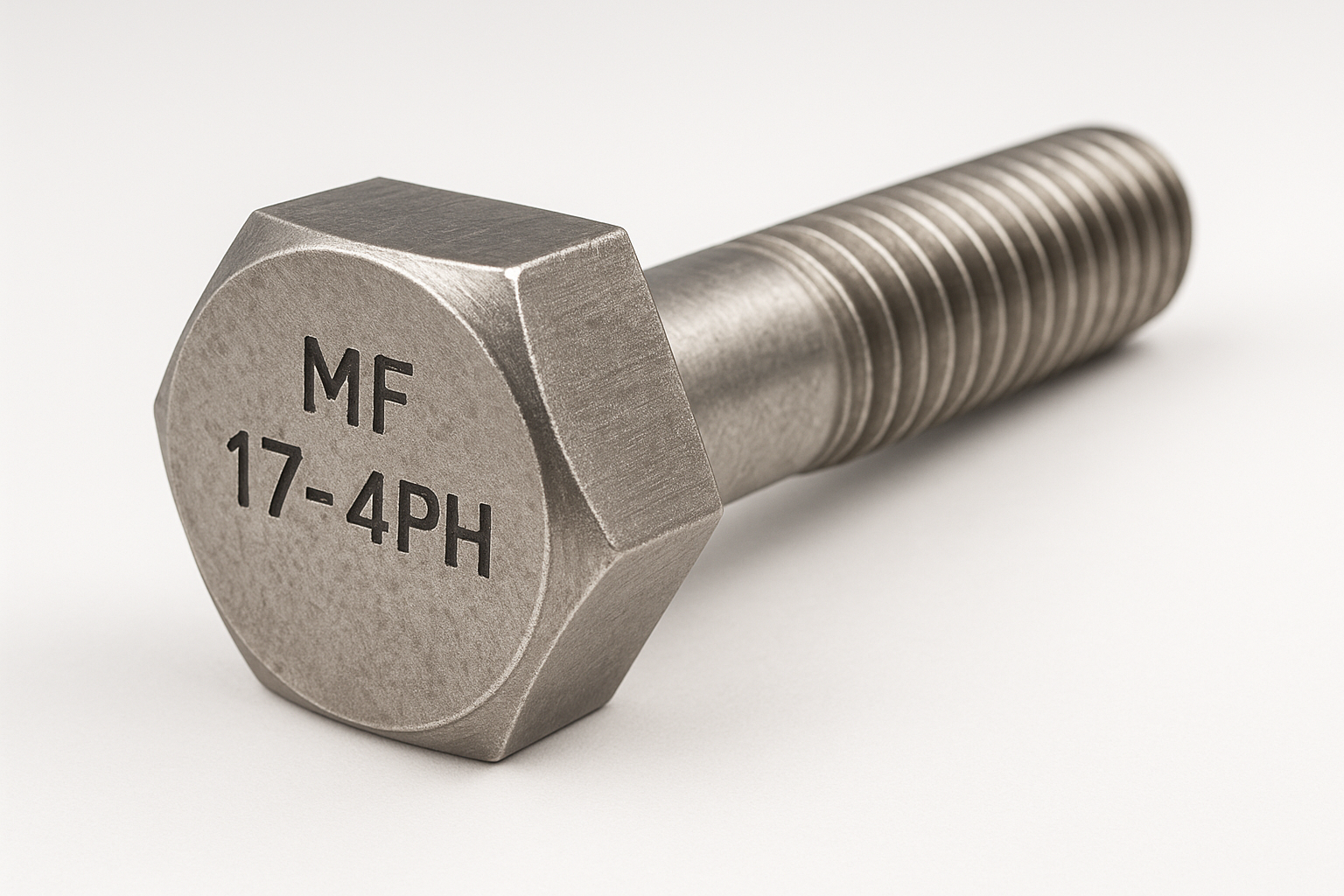


What is honeycomb corrosion
Honeycomb corrosion, often likened to the phenomenon of pitting, is a form of localized corrosion that manifests itself through small point attacks or cavities on the surface of the material. Unlike uniform corrosion, this type of degradation can progress in depth without obvious signs, leading to sudden perforations and structural failure.
This is a typical phenomenon for stainless steels and corrosion-resistant alloys when operating in environments containing chlorides, salt solutions or aggressive chemical conditions.
Why honeycomb corrosion is critical in fastening systems
In fastening systems, honeycomb corrosion is a high risk because:
- Dramatically reduces the resistant section of the bolt or screw;
- can trigger in areas that are difficult to inspect, such as threads and contact surfaces;
- leads to sudden failures without warning;
- makes even proper mechanical sizing ineffective.
Therefore, honeycomb corrosion resistance is a key parameter when selecting materials for offshore, marine, chemical and energy applications.
The ASTM G48 standard: pitting and crevice corrosion resistance test
ASTM G48 is one of the most widely used reference standards for evaluating the alveolar and crevice corrosion resistance of stainless, duplex and super duplex steels.
The test involves exposing the material to a temperature-controlled ferric chloride solution for a defined period of time. At the end of the test, it is evaluated:
- The presence of localized attacks;
- the loss of mass;
- The depth and distribution of the alveoli.
ASTM G48 is particularly suitable for comparing materials such as. AISI 316L, 904L e s32750-w-1-4410-saf-2507/">super duplex UNS S32750 in terms of actual behavior in chlorinated environments.
The ASTM A262 standard: intergranular corrosion and sensitization
ASTM A262 is a standard focused on the evaluation of intergranular corrosion, a different but closely related phenomenon to honeycomb corrosion in terms of material reliability.
This standard is used to check whether a stainless steel is sensitized, that is, susceptible to preferential corrosion along grain boundaries, often as a result of improper heat treatment or welding.
A material that passes ASTM A262 tests also offers greater assurance against the initiation of localized corrosion under real operating conditions.
Comparison of ASTM G48 and ASTM A262
| Standard | Type of corrosion evaluated | Test objective | Typical application |
|---|---|---|---|
| ASTM G48 | Honeycomb / pitting / crack | Resistance in chlorinated environments | Offshore, marine, chemical |
| ASTM A262 | Intergranular | Sensitization Verification. | Welded components, austenitic stainless |
More suitable materials against honeycomb corrosion
Honeycomb corrosion resistance is highly dependent on the chemical composition of the material, particularly the chromium, molybdenum and nitrogen content (PREN value).
Some of the most widely used materials to counteract this phenomenon include:
- AISI 316 / 316L – Suitable for moderate conditions;
- 904L – High resistance in acid and chlorinated environments;
- Super duplex UNS S32750 – Excellent resistance to pitting and cracking;
- Super duplex UNS S32760 – Suitable for extremely aggressive environments.